Leave Your Message
China has become the world’s largest electric vehicle market and charging infrastructure base. The International Energy Agency’s Global EV Outlook 2024 reports that China held most of the world’s public charging points in 2023. Its public charging network also expanded rapidly, supporting highways, commercial fleets, residential communities, and industrial parks.
Domestic demand creates a crowded supplier landscape. Yet scale alone does not identify the best Project Ev Charger partner. A reliable supplier must combine stable power modules, accurate load balancing, thermal protection, and practical after-sales support. China’s Electric Vehicle Charging Infrastructure Promotion Alliance reported more than 3.5 million charging facilities nationwide by the end of 2024. That number shows market strength, but it also raises procurement questions about maintenance quality and long-term uptime.
Leading Chinese project charger suppliers usually offer DC fast chargers, AC units, energy management platforms, and customized cabinet designs. Buyers should examine GB/T compatibility, OCPP support, payment integration, IP ratings, warranty terms, and spare-parts availability. Field experience matters. A charger beside a busy logistics depot faces different demands from one installed in a hotel parking area.
Data can mislead.
Shipment rankings may not reveal software reliability, installation performance, or service response times. BloombergNEF and IEA reports help explain market direction, but they do not replace factory audits or reference-site inspections. This guide evaluates China’s top suppliers through technical capability, project experience, certification readiness, production capacity, and lifecycle value. Some conclusions remain imperfect, because supplier disclosures and regional performance data are not always consistent.
What Are China Top Project EV Charger Suppliers?
What Defines a Leading Chinese Project EV Charger Supplier?
A leading Chinese project EV charger supplier offers more than competitive pricing. It understands charging demand, site capacity, climate, traffic flow, and user behavior. Experienced suppliers can recommend suitable power levels, connector options, enclosure protection, and load management systems. They also provide clear technical drawings, installation guides, test reports, and maintenance procedures.
Reliability must be demonstrated, not merely promised. Check production records, quality-control processes, factory testing, and independent certification. Ask how the supplier handles overheating, communication failures, payment interruptions, and replacement parts. A dependable team responds with documented procedures and practical timelines. It should also support software integration, remote monitoring, firmware updates, and local service coordination. No supplier is perfect. A transparent supplier admits limitations instead of hiding them.
Tips: Request a pilot installation before placing a large order. Test charging performance during peak demand, heavy rain, and low temperatures. Review response times, spare-part availability, warranty terms, and technician training. Ask for references from similar commercial or public projects. Small details matter. A missing cable specification or unclear responsibility can delay an entire site. Suppliers should also explain how they reduce packaging waste and manage product end-of-life responsibly. These details reveal whether a supplier is prepared for real project conditions, not only a sales presentation.
A practical, brand-neutral evaluation framework for selecting project-ready EV charger suppliers
| Evaluation Dimension | Project-Ready Benchmark | Relevant Technical Reference | Why It Matters | Recommended Verification Evidence |
|---|---|---|---|---|
| Charging Power Portfolio | AC chargers from approximately 7–22 kW and DC chargers from approximately 30–480 kW, depending on the vehicle and site requirements. | AC and DC charging architectures; vehicle voltage and current limits. | A broad product range allows one supplier to support residential, workplace, fleet, highway, and depot projects. | Complete datasheets, power-module configuration, output-current curves, and site-specific load calculations. |
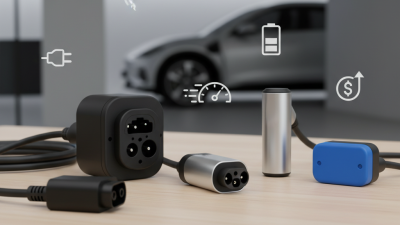
| Connector and Regional Compatibility | Support for the connector standards required by the destination market, such as Type 2, CCS2, CCS1, CHAdeMO, or GB/T. | IEC 62196 series, regional charging requirements, and applicable national standards. | Correct connector selection affects vehicle compatibility, certification, installation, and customer usability. | Connector certificates, pin assignments, cable ratings, mechanical drawings, and target-market compliance documents. |
| Safety and Electrical Protection | Protection against overvoltage, overcurrent, short circuit, residual current, overtemperature, surge, and emergency-stop conditions. | IEC 61851, IEC 60364-related installation practices, and applicable local electrical codes. | Safety functions reduce equipment damage, electrical hazards, downtime, and project liability. | Protection matrix, circuit diagrams, fault logs, insulation tests, residual-current test results, and emergency-stop test records. |
| Communication and Software Integration | Support for OCPP 1.6J as a baseline, with OCPP 2.0.1 available for projects requiring newer device-management and security functions. | OCPP 1.6J, OCPP 2.0.1, Ethernet, Wi-Fi, 4G/5G, and optional local APIs. | Open communication reduces dependence on a single software platform and supports remote operations. | Protocol declaration, integration test results, API documentation, cybersecurity process, and remote-firmware-update procedure. |
| Charging Performance | High-power DC systems should provide stable output across the specified voltage and current range, with efficiency commonly targeted at 95% or higher at rated conditions. | Power-conversion efficiency, power factor, output regulation, thermal derating, and load sharing. | Stable performance improves charging time, energy utilization, operating cost, and user satisfaction. | Independent test reports, efficiency curves, power-factor data, temperature-derating curves, and full-load endurance results. |
| Outdoor Environmental Protection | Outdoor equipment commonly targets IP54–IP55 or higher; exposed installations may require higher protection depending on the enclosure and local conditions. | IEC 60529 ingress-protection ratings and IEC 62262 impact-protection testing. | Dust, rain, moisture, impact, salt, and temperature can strongly influence service life and reliability. | IP and IK test reports, operating-temperature range, corrosion-resistance specification, and environmental test records. |
| Vehicle Communication and Smart Charging | Support for required vehicle-charger communication functions, with ISO 15118 capability when plug-and-charge or advanced energy-management features are needed. | IEC 61851 control signaling and ISO 15118 communication requirements. | Smart charging can improve grid coordination, user convenience, and future compatibility. | Interoperability test records, supported ISO 15118 functions, vehicle test list, and firmware-release history. |
| Certification and Market Access | Certification must match the destination market, such as CE-related conformity for applicable European projects or equivalent national requirements elsewhere. | Applicable electrical-safety, EMC, radio, metrology, and environmental regulations. | Valid documentation reduces customs, installation, approval, and operational risks. | Current certificates, declarations of conformity, EMC reports, safety reports, and certificate-to-model traceability. |
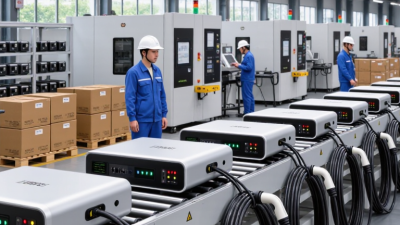
| Manufacturing and Quality Management | A controlled production process with incoming inspection, assembly testing, burn-in or functional testing, traceability, and corrective-action procedures. | ISO 9001-based quality management practices and documented production controls. | Consistent quality is essential when deploying large quantities of chargers across multiple sites. | Factory audit, process-flow chart, sample inspection records, serial-number traceability, and quality KPI reports. |
| Warranty and Lifecycle Support | A clearly defined warranty is commonly offered for 24–36 months, with optional extended coverage and spare-parts availability. | Warranty terms, service-level agreements, mean-time-to-repair targets, and product lifecycle policy. | Long-term support affects total cost of ownership and station availability. | Warranty contract, spare-parts list, service network, escalation process, remote diagnostics, and end-of-life notice policy. |
| Customization and Project Delivery | Ability to customize enclosure design, cable length, payment interface, communications, language, load management, and installation configuration without compromising certification. | Engineering-change control, configuration management, FAT/SAT procedures, and project documentation. | Project-specific adaptability helps meet local site, utility, fleet, and regulatory requirements. | Approved drawings, bill of materials, sample approval plan, factory-acceptance test protocol, delivery schedule, and installation manuals. |
| Commercial Transparency | A complete quotation should separate equipment price, software fees, accessories, shipping, installation support, commissioning, warranty, and recurring service costs. | Total-cost-of-ownership analysis and contract change-control requirements. | Transparent pricing makes supplier comparisons more accurate and reduces unexpected project costs. | Itemized quotation, payment terms, delivery conditions, software-license terms, spare-parts pricing, and service-level agreement. |
Note: The benchmarks above are brand-neutral industry reference points. Final requirements should be confirmed against the destination market, vehicle compatibility, site electrical design, local regulations, and project contract.