Leave Your Message

How to Choose an EV Charging Adapter in 2026?

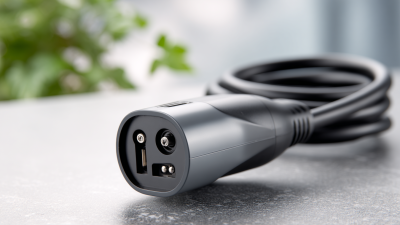
Choosing an EV charging adapter in 2026 requires more than matching two connector shapes. Your vehicle, home supply, charging station, and driving routine must work together safely. A compact adapter may fit perfectly, yet still deliver limited power or create unnecessary heat.

This guide examines the details that experienced EV owners check before buying. We will compare connector compatibility, charging speed, voltage limits, weather resistance, cable quality, and manufacturer support. We will also explain why vehicle manuals and certified product specifications deserve more trust than marketplace reviews alone. The phrase “Ev Adapt Charg” may appear in online searches, but reliable decisions depend on verified technical information.

Small details matter. A 32-amp adapter can behave differently on a circuit designed for lower continuous loads. A cable lying across wet concrete needs suitable protection and careful placement. At home, an electrician can confirm the outlet, breaker, grounding, and installation condition before regular charging begins. Public charging adds other concerns, including station compatibility, payment systems, and cable reach.

There is no universal best adapter.

The right choice depends on use.

Some recommendations may seem obvious, but real charging habits often expose gaps. You may rarely need maximum speed. You may value a lighter cable, stronger weather sealing, or a longer warranty instead. As standards and vehicle features continue changing through 2026, review current documentation before purchasing. A thoughtful adapter should support dependable charging, protect your vehicle, and remain practical after the first few convenient weeks.
How to Choose an EV Charging Adapter in 2026?

Identify Your EV’s Charging Port and Regional Connector Standards

How to Choose an EV Charging Adapter in 2026?

Identify Your EV’s Charging Port and Regional Connector Standards

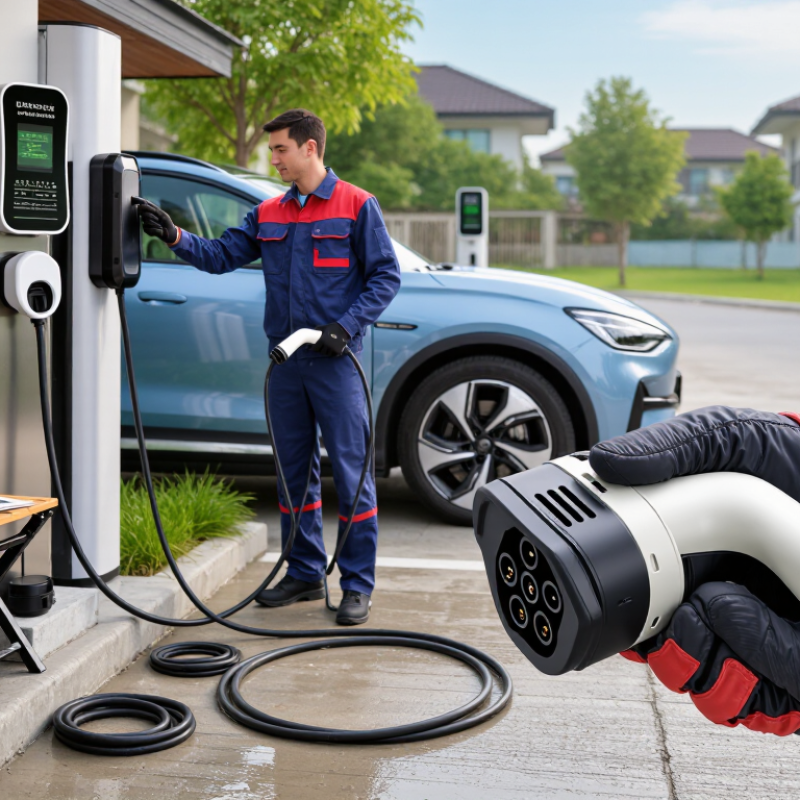
Start with the inlet on your vehicle, not the plug shown in a charger listing. Check the owner’s manual or the label inside the charging flap. A clear photo can help, but similar-looking connectors may support different charging methods. Check the details.

In North America, vehicles may use J1772 for AC charging, CCS1 for DC fast charging, or the North American Charging Standard connector. Across much of Europe, Type 2 is common for AC, while CCS2 is widely used for DC. Other markets may use different combinations, including CHAdeMO. Standards vary by region and model year, so never rely on where the vehicle was assembled.

Match the adapter to the exact charging task. An AC adapter will not automatically enable DC fast charging, and connector shape alone does not confirm compatibility. Verify supported current, voltage, charging direction, and communication requirements in the vehicle and charger documentation. A mismatch may prevent charging or cause the system to stop. Some listings make compatibility sound simpler than it is; I would check both manuals before buying. Also inspect the plug and inlet for damage, dirt, or moisture before use, and choose equipment tested for the intended region.
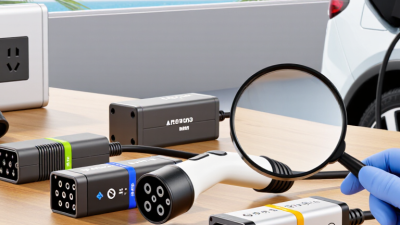
How to Choose an EV Charging Adapter in 2026?

Identify your EV’s charging port and match it with the regional connector standard before selecting an adapter.

The chart shows representative nominal AC supply voltages used with common regional EV charging standards. North American installations commonly use 120–240 V, while Type 2 systems commonly use 230 V, GB/T systems commonly use 220 V, and Japanese installations commonly use 100–200 V. Always verify the vehicle inlet, adapter specification, local electrical supply, and charging mode.

Match the Adapter to Your Charging Level and Power Requirements

How to Choose an EV Charging Adapter in 2026?

Match the adapter to your charging level and power requirements before checking appearance or price. Level 1 charging uses a standard household circuit, usually 120 volts and about 1.4 to 1.9 kilowatts. It suits overnight charging and low daily mileage. A warm outlet, loose plug, or aging wiring changes the risk. Do not ignore those signs.

Level 2 equipment normally uses 208 or 240 volts and can deliver roughly 3.3 to 19.2 kilowatts. Your vehicle may accept less than the adapter can provide. That is acceptable, because the car controls its charging rate.

The circuit must still support the adapter’s continuous current. For example, a 32-amp charger commonly needs a properly sized 40-amp circuit. Confirm this with the vehicle manual and a qualified electrician.

A connector adapter must match both ends, not just the socket shape. Check inlet type, voltage, maximum amperage, weather rating, and locking behavior. DC fast charging needs a compatible vehicle system and communication protocol. A simple passive adapter cannot create that capability.

I once focused too much on connector fit and overlooked cable temperature. That was a useful warning.

Choose the shortest practical cable, keep contacts clean, and stop charging if heat, odor, or discoloration appears. Buying extra power may sound future-ready, but unused capacity can increase cost without improving charging speed.

Check Electrical Ratings, Safety Certifications, and Compatibility

Choosing an EV charging adapter in 2026 starts with electrical ratings, not appearance. Check the adapter’s input voltage, output voltage, current limit, and maximum power. These values must match both the charging station and your vehicle. A higher current rating does not make every vehicle charge faster. The vehicle controls the actual charging rate.

Read the label carefully. Look for continuous-load information, cable temperature limits, enclosure protection, and grounding requirements. In outdoor use, water resistance matters, but an outdoor rating does not excuse damaged covers or loose connections.

Safety certifications should come from recognized testing bodies in your region. Verify the certification number through an official database when possible. A printed symbol alone proves little. This is easy to overlook.

Compatibility involves more than connector shape. Confirm the adapter supports your vehicle’s charging type, communication system, and charging mode. Some adapters work only with AC charging, while others support specific DC systems. Check the station socket, vehicle inlet, and adapter direction before buying.

“I once assumed two similar plugs were interchangeable. They were not.” That mistake changed how I inspect every specification sheet.

Use an adapter with overheat protection, short-circuit protection, and reliable strain relief.

If the cable becomes unusually hot, smells like melting plastic, or shows discoloration, stop using it.

A qualified electrician can check circuit capacity, especially in older homes. Manufacturer instructions still deserve careful reading, even when the setup looks familiar.

Compare Build Quality, Weather Protection, and Practical Features

Choosing an EV charging adapter in 2026 requires more than checking its maximum power. Build quality affects daily safety, handling, and service life. Examine the connector housing, cable jacket, and strain relief closely. A firm connector should feel balanced, not brittle or excessively loose. The cable should bend smoothly without sharp creases. Heavy does not always mean durable. Sometimes, it only means inconvenient.

Weather protection deserves careful attention. Look for a clearly stated ingress protection rating and a wide operating-temperature range. These details matter during rain, dust, winter mornings, and hot parking lots. However, a rating is not magic. Water can still enter through damaged seals or an improperly fitted connection. Keep the adapter off wet ground. Inspect the cap, contacts, and cable after dusty trips. I have found that small scratches can become bigger problems when ignored.

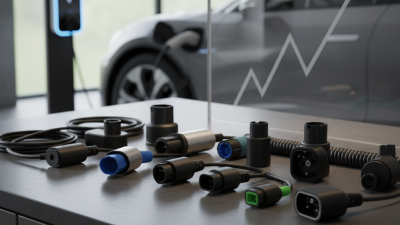
Practical features often decide whether an adapter stays useful. A readable status light helps during nighttime charging. Temperature monitoring can reduce risk when plugs become unusually warm. A locking mechanism may prevent accidental disconnection, while a compact carrying case protects the cable in the trunk. Choose a cable length that reaches comfortably without lying across traffic areas. Longer is not automatically better. It can add weight and invite tangles. Check compatibility with your vehicle and charger before purchase, because convenience features cannot fix a mismatched connection.

How to Choose an EV Charging Adapter in 2026? - Compare Build Quality, Weather Protection, and Practical Features

What to Compare What to Look For Why It Matters Practical Check
Connector compatibility Confirm the exact connector standards at both ends and whether the adapter is intended for AC charging or DC fast charging. Connectors that look similar may use different electrical systems or communication protocols. An adapter designed for one charging type may not work for another. Check the vehicle manual, charging-station instructions, and adapter documentation before purchase.
Current and voltage rating Choose an adapter with clearly stated electrical ratings suitable for the intended charging setup. The usable charging limit is constrained by the lowest-rated component in the charging path, as well as the vehicle and charging equipment. Look for the rating on the product label or technical data sheet; do not rely on a headline charging-power claim alone.
Housing and contact construction Prefer a solid, well-fitted housing, secure connector retention, smooth mating surfaces, and contacts without visible corrosion or damage. Poor fit, damaged contacts, or a loose connection can affect reliable operation and may create a safety concern. Inspect the adapter before use. Stop using it if the casing is cracked, pins are bent, or the connector feels unusually loose.
Safety certification and documentation Look for traceable certification or testing information applicable to EV charging connectors, such as documentation referencing UL 2251 where relevant. A recognizable mark should be verifiable and apply to the actual product and intended use; a claim in an online listing alone is not proof. Check the product label and documentation, and verify certification details through the issuing organization when possible.
Weather protection Check the stated IP rating and whether it applies when the adapter is connected, disconnected, or both. For example, IP54 indicates dust protection against limited ingress and protection against water splashes under test conditions. Weather resistance varies by product and configuration. A rating does not mean an adapter is suitable for every exposure or for immersion. Read the manufacturer’s conditions of use. Keep connector faces clean and dry, and use protective caps when provided.
Temperature range Choose a product with a published operating-temperature range that covers the climate and storage conditions where it will be used. Temperature limits are product-specific and can affect safe operation or durability outside the stated range. Compare the range in the technical specifications with the expected outdoor conditions; avoid assuming all adapters share the same limits.
Locking and retention Check that the adapter seats fully and that any latch, lock, or release mechanism works as described for the compatible vehicle and charging equipment. A secure connection helps prevent accidental separation during charging; locking behavior depends on the adapter and connected equipment. Follow the connection and removal sequence in the instructions. Never force a connector or bypass a lock.
Portability and storage Consider size, weight, a protective case, dust caps, and a way to keep the adapter from moving around in the vehicle. Good storage helps protect connector surfaces from dirt, moisture, impact, and cable or luggage pressure. Choose a case that holds the adapter securely and lets it dry before storage if it has been exposed to moisture.
Warranty and support Review the warranty period, return terms, and availability of clear instructions and technical support. Useful documentation and support make it easier to confirm compatibility and address defects or operating questions. Save the receipt and product specifications, and confirm the warranty covers the intended charging use.

Note: Adapter compatibility, electrical limits, and weather protection are product-specific. Always follow the vehicle, charging-equipment, and adapter instructions.

Verify Charger Access, Warranty Coverage, and 2026 Requirements

An adapter can fit the plug and still fail to start a charging session. Check whether the charger operator permits adapters for your vehicle and connector type. Compatibility is not access. Confirm this for both public stations and any home charger you plan to use. Also compare the adapter’s voltage, current, and charging-speed limits with your vehicle’s manual. A mismatch may reduce charging speed or prevent charging altogether.

Read the warranty terms before buying. Ask the vehicle maker and adapter seller, in writing, whether using that adapter affects coverage for the charging port or related components. Keep the reply, receipt, and product documentation together. Check the adapter for recognized safety testing and clear instructions; vague ratings deserve caution. I’d avoid treating a salesperson’s verbal assurance as proof. It may be convenient, but it is hard to rely on later.

For 2026
requirements can vary by region, vehicle, and charging network, and technical rules may change. Verify current guidance with the vehicle maker, charger operator, and relevant local authority before purchase. Check for limits on adapter use, required safety markings, and software or firmware updates. A quick test at a compatible station can reveal problems, though one successful session proves little. I still find plug shape gets too much attention; access and written coverage are less visible, but matter just as much.