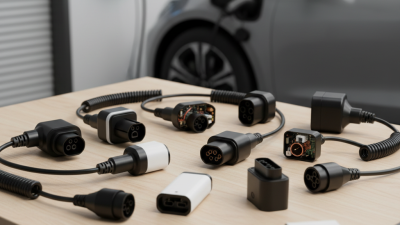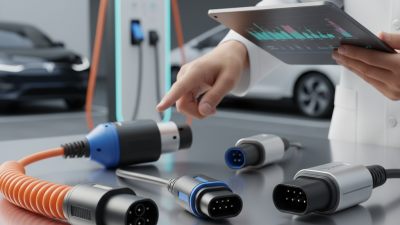
Choosing an Ev Charger Ac Adapter can look simple until a vehicle, charger, and wall outlet come from different markets. A connector may fit, yet the electrical ratings may not match. That difference matters. Buyers should check input voltage, current limits, connector type, and the charger manufacturer’s instructions before comparing prices. A neat product photo cannot confirm compatibility.
Global purchasing adds practical details. A buyer in a warm coastal region may care about moisture protection, while a fleet operator may need a cable that withstands frequent handling. Check product labels and technical documents, not just marketplace descriptions. Ask the supplier to confirm which vehicle models and charging equipment the adapter supports. Clear answers are a good sign. Vague promises are not.
These seven buying tips focus on compatibility, build quality, documentation, and supplier communication. They are not a substitute for checking your equipment or asking a qualified professional when specifications are unclear. One overlooked rating can turn a convenient purchase into an unusable one. And product listings can be incomplete. Even experienced buyers may miss a small detail, such as a regional plug variation or a limit hidden in the manual. Take time to verify the exact model before ordering. That step is less exciting, but usually worthwhile.
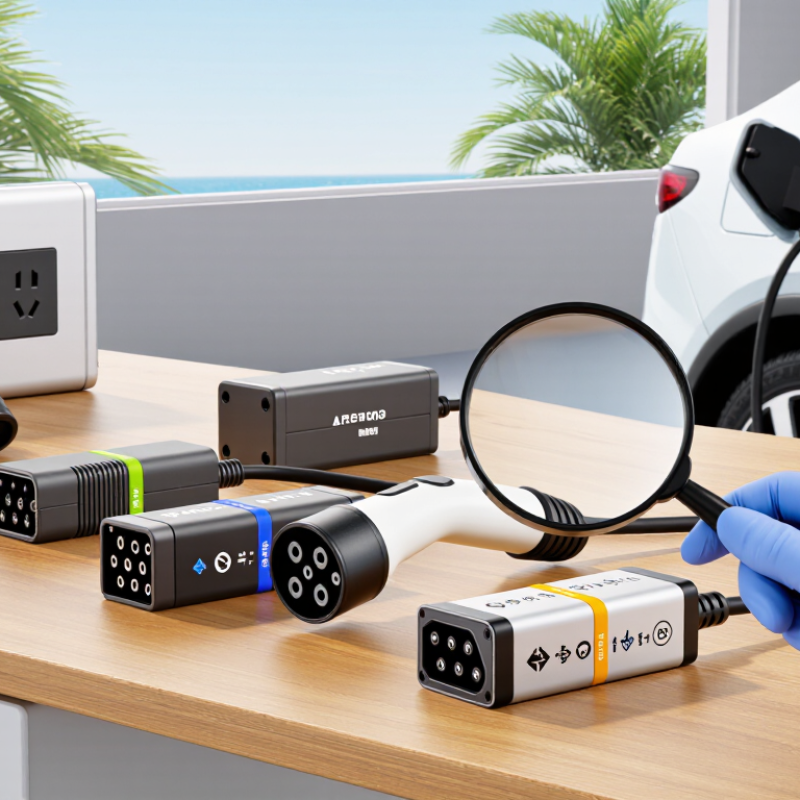
Before comparing AC charging adapters, map where and how you will charge. A home setup may rely on a wall outlet, while travel often means unfamiliar sockets and connector standards. Check the vehicle’s inlet type and the charging cable’s plug. Take a clear photo of each; similar-looking connectors can differ.
Then confirm the vehicle’s maximum AC charging rate in its manual. The adapter’s voltage, current, phase, and grounding must also suit both the vehicle and the power supply. An adapter changes the connection, not the vehicle’s onboard charging limit. More amperage on the label does not guarantee faster charging. Easy to overlook. I would also check whether the adapter locks securely and is rated for the location, especially outdoors. A loose fit or an unsuitable power source deserves attention, not a workaround. If the electrical supply is unclear, ask a qualified installer to verify it. Compatibility is more than matching plug shapes. It means the car, adapter, cable, and supply work within their stated ratings.
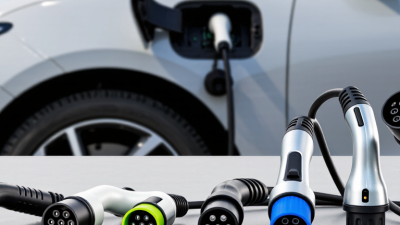
7 EV Charger AC Adapter Buying Tips for Global Buyers
A suitable AC adapter begins with voltage, current, and frequency. Household power varies widely: many European markets use 230 V and 50 Hz, while North American homes commonly use 120 V and 60 Hz. Check the vehicle manual and adapter label before connecting anything. The International Energy Agency reported almost 14 million electric car sales in 2023, increasing demand for compatible charging equipment. More buyers also mean more compatibility mistakes.
Current matters just as much. An adapter rated for 10 A should not replace a required 16 A unit. Calculate power with voltage multiplied by current, then allow practical headroom. A 230 V, 16 A connection can deliver about 3.7 kW under suitable conditions. Heat around a plug, a loose socket, or a warm cable signals trouble. Stop using it.
Connector shape is only part of the decision. IEC 62196 covers common electric-vehicle charging interfaces, while IEC 61851 addresses conductive charging control and safety. However, a physically matching plug may still use different communication or grounding requirements. Confirm the connector, pilot signal, earthing system, and residual-current protection. Regional plugs also matter, including socket depth and locking features. Tiny details count.
I have seen buyers focus on cable length and overlook frequency. That is an expensive assumption. Confirm national certification requirements, outdoor protection ratings, and the adapter’s input range. The IEA’s Global EV Outlook 2024 shows charging infrastructure expanding quickly, but local installations still differ. Datasheets are useful. A qualified electrician is safer. Recheck everything.
When buying an EV charger AC adapter internationally, safety certification should be your first filter. Certification marks must match the destination market, voltage range, and product category. A logo alone is not proof. Ask for a certificate number, testing laboratory, and current technical report. Check whether the document covers the exact model, not only a similar series.
Tip: Read the electrical label carefully. Confirm input voltage, frequency, output current, plug type, and grounding method. A mismatch can cause overheating or charging failure. The adapter should also provide overcurrent, overvoltage, short-circuit, thermal, and ground-fault protection. Surge protection is valuable in areas with unstable power. Look for clear protection ratings in the manual, not vague claims on packaging.
A reliable supplier should explain protection behavior, such as automatic shutdown during excessive heat. Cables need suitable insulation and strain relief, especially when used outdoors or in cold weather. Check the enclosure’s environmental rating for dust and moisture. I would not trust a cheap adapter with missing test records. Still, documentation can be imperfect or difficult to compare across countries. That is worth questioning. Before purchase, have a qualified electrician confirm compatibility with your local circuit and charging equipment. Keep the inspection practical: labels, documents, connectors, and protection details should agree.
Compare typical household mains voltages before choosing an adapter. Confirm the charger’s input-voltage and frequency ratings match the installation location.
Typical nominal values shown: Japan 100 V (50/60 Hz), North America 120 V (60 Hz), the UK and much of Europe 230 V (50 Hz), and Australia 230 V (50 Hz). Actual supplies and local requirements can vary. Check locally recognized safety certifications and verify protections such as overcurrent, residual-current (RCD/GFCI), overtemperature, and surge protection before purchase.
A sturdy EV charger AC adapter should feel solid without being awkwardly heavy. Check the housing for tight seams, a secure connector latch, and cable strain relief that bends smoothly. These details matter. A loose joint or brittle cable jacket can become a weak point after repeated handling. If possible, inspect sample units and ask how the adapter performs after regular connection cycles, not just when new.
Weather resistance needs careful comparison. Look for a clearly stated ingress protection rating and confirm which parts it covers. A rating does not mean every adapter can be left outdoors in every condition. Rain, dust, strong sunlight, and freezing temperatures create different stresses. Check the operating temperature range, seal design, and corrosion resistance of exposed contacts. A little skepticism helps; impressive wording is not a substitute for test details.
Warranty terms can reveal how confidently a supplier stands behind its build quality. Compare coverage length, repair or replacement procedures, and exclusions for cable wear or moisture damage. For global orders, ask whether support and replacement parts are available in your destination market. Read the fine print. It is easy to focus on the warranty period and miss who pays shipping, or how long a claim may take. A clear, practical process is often more useful than a longer promise.
For an EV charger AC adapter, supplier support matters after the sample arrives. The IEA’s Global EV Outlook 2024 reports that public charging points grew by about 40% in 2023, reaching more than four million worldwide. That expansion makes dependable replacement parts and technical responses increasingly important. Ask how quickly the supplier answers compatibility questions, and request clear drawings, test records, and a named contact. Ask for evidence. Check that the adapter’s connector, rated current, cable length, and intended charger interface match your installation. A low quote is not useful if a mismatch delays commissioning.
Compare total delivered cost, not just unit price. Request separate figures for samples, packaging, freight, and any tooling, then confirm the quotation’s currency and validity period. Delivery terms should state the dispatch point, estimated production time, shipping method, and who arranges transport and insurance. Put these details in writing. The World Bank’s Logistics Performance Index 2023 highlights how customs clearance and shipment reliability affect international supply chains; those same factors can shift an adapter’s arrival date. Ask for milestone updates and a remedy for late dispatch. One caveat: even careful forecasts can miss port congestion or component shortages. Keep a modest schedule buffer, and check whether support includes troubleshooting after delivery, not only before payment.
| Tip | Buying Dimension | What to Evaluate | Practical Considerations | Buyer Action |
|---|---|---|---|---|
| 1 | Connector and vehicle compatibility | Confirm the adapter’s inlet and outlet connector types, intended vehicle or EVSE connection, and whether the product is designed for AC charging. Common regional connector families include Type 1, Type 2, GB/T AC, and J1772; availability and compatibility vary by vehicle and market. | A physical fit alone does not guarantee electrical or communication compatibility. An adapter generally cannot make a vehicle or charging station exceed its own supported charging limits. | Provide the vehicle model, charging-station connector, destination market, and required adapter direction. Request a compatibility list and written confirmation. |
| 2 | Electrical rating and installation conditions | Check rated voltage, current, number of phases, frequency, maximum power, cable or contact ratings, and operating-temperature limits. Match these details to the vehicle, EVSE, and local electrical supply. | AC charging power depends on the lowest-rated component in the charging setup, as well as the vehicle’s onboard charger and the available supply. A higher current rating does not guarantee faster charging. | Ask for a datasheet showing ratings and derating conditions. Have a qualified installer verify suitability for the intended circuit and location. |
| 3 | Safety and market compliance | Identify the applicable safety and regulatory requirements for the destination country. Request relevant test reports, declarations, marking details, and traceable model information for the exact adapter being quoted. | Requirements differ by jurisdiction and product category. A supplier’s general claim of compliance is not a substitute for documentation that covers the specific model and intended market. | Have your importer, compliance specialist, or local authority confirm which standards and documents are required before placing a production order. |
| 4 | Supplier engineering and after-sales support | Evaluate response time, technical-language capability, documentation quality, sample support, troubleshooting process, spare-part availability, and the process for handling product issues. | Support can be particularly important when orders involve multiple connector types, local labeling, or installation questions. Confirm who provides technical assistance and during which business hours. | Send a technical questionnaire before ordering. Agree on a named contact, escalation route, response-time expectations, and required manuals or installation guidance. |
| 5 | Total landed cost and quotation detail | Compare unit price together with tooling or customization charges, packaging, inspection, freight, insurance, import duties, taxes, and payment fees. Confirm the currency, quote validity, and any minimum order quantity. | The lowest unit price may not represent the lowest delivered cost. Freight rates, customs charges, taxes, and currency movements depend on the route, shipment size, and destination. | Request an itemized quotation and compare suppliers using the same quantity, specification, destination, shipping method, and named Incoterms® rule and place. |
| 6 | Production schedule and delivery terms | Separate sample approval, production, inspection, dispatch, and transit time. Confirm the delivery location, Incoterms® rule, shipment method, packaging, tracking, and responsibility for customs clearance. | Lead times depend on stock, order quantity, customization, component availability, inspection, and transport conditions. A quoted production lead time is not necessarily the same as door-to-door delivery time. | Obtain a written schedule with milestones and a latest dispatch date. For time-sensitive orders, confirm contingency plans and who manages shipping documents. |
| 7 | Quality control, warranty, and traceability | Ask how incoming materials, assembly, electrical safety, and final inspection are controlled. Check batch identification, inspection records, defect handling, warranty coverage, and the process for returns or replacements. | Warranty length and exclusions are supplier-specific. Clarify whether coverage includes parts, labor, transport, and failures caused by normal use, installation, or environmental exposure. | Approve a written quality and warranty agreement. For larger orders, consider a pre-shipment inspection and retain samples and batch records. |
Note: Connector availability, certification requirements, electrical ratings, prices, and delivery schedules vary by product and destination. Verify the exact specification and local requirements before purchase or installation.